
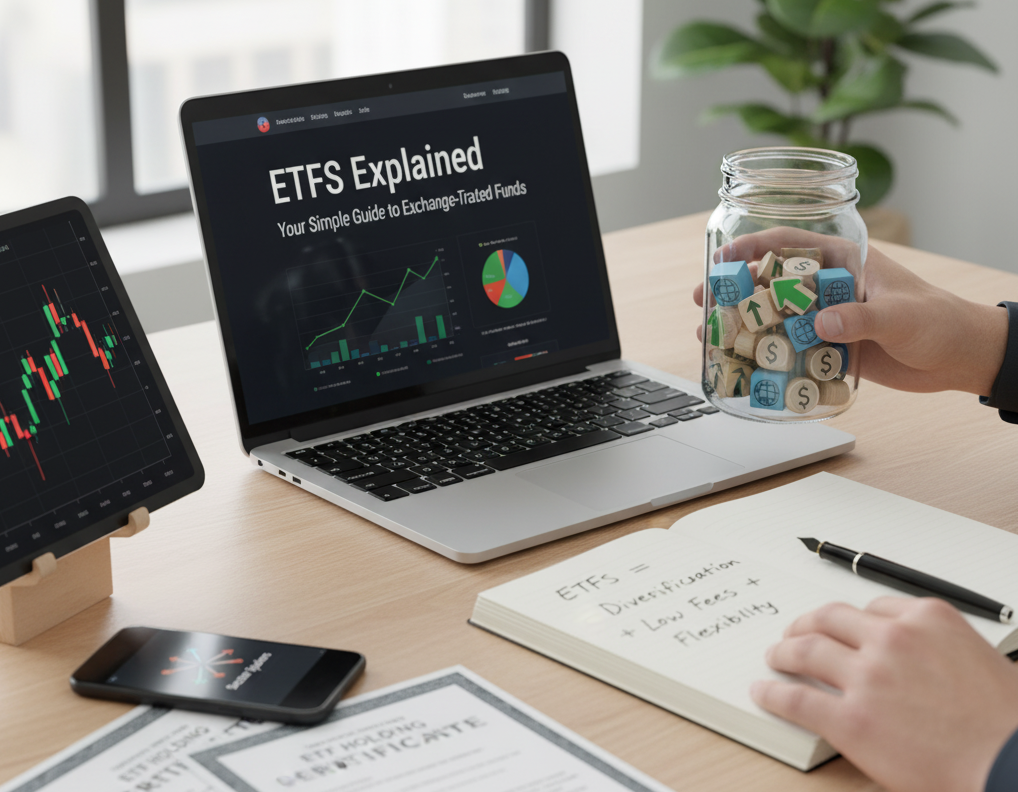
An Exchange-Traded Fund (ETF) is one of the most popular investment tools today, but what exactly is it?
In simple terms, an ETF is like a basket of investments —it can hold stocks, bonds, commodities (like gold or oil), or a mix of assets. The key feature is that this basket is bundled into a single fund that trades on a stock exchange just like a single share of stock.
When you buy one share of an ETF, you’re instantly buying a tiny piece of everything in that basket. This makes ETFs an excellent way to achieve instant diversification without having to buy dozens of individual stocks or bonds.
🧩 Main Types of ETFs
ETFs are versatile and are often categorized based on the assets they hold or the investment strategy they follow:
1. Equity ETFs (Stock ETFs)
These funds invest primarily in stocks and aim to give you exposure to specific stock market sectors, regions, or indexes.
- Index Funds (The Most Common): These ETFs are designed to track a major stock market index, such as the S&P 500 (a basket of 500 large US companies) or the Dow Jones Industrial Average. Buying a share of an S&P 500 ETF means you are investing in those 500 companies simultaneously.
- Sector Funds: These focus on a specific industry, such as technology, healthcare, or energy.
- International Funds: These invest in stocks from outside your home country.
2. Fixed-Income ETFs (Bond ETFs)
These funds hold various types of bonds (debt instruments), making them a simpler way to invest in the bond market.
- Government Bond ETFs: Hold bonds issued by a national government (like U.S. Treasury bonds).
- Corporate Bond ETFs: Hold bonds issued by various corporations.
- High-Yield (“Junk”) Bond ETFs: Hold bonds from companies with lower credit ratings, offering higher potential returns but carrying greater risk.
3. Commodity ETFs
These funds allow you to invest in physical assets without having to actually store them yourself.
- Physical Commodity ETFs: These hold actual commodities, like gold or silver.
- Futures-Based Commodity ETFs: These invest in contracts that speculate on the future price of commodities, such as oil or natural gas.
4. Specialized or Strategy ETFs
These funds use specific techniques to achieve investment goals:
- Active ETFs: Unlike most ETFs that passively track an index, these funds are managed by a fund manager who actively picks investments, trying to beat the market.
- Factor/Smart Beta ETFs: These select stocks based on specific characteristics, or “factors,” such as value, size, or momentum, rather than just market capitalization.
ETFs are popular because they offer low management fees (especially index funds) and flexibility—you can buy or sell them anytime the stock market is open. They’re an excellent tool for nearly every type of investor, from beginners to experienced traders. If income-focused ETFs interest you, continue with our Dividend Investing hub and Dividend Income Calculator.
Explore next: Run the compare ETFs vs. mutual funds, see how expenses compound with the Investment Fee Calculator, or explore Dividend Investing.