Everyone knows the classic financial advice: skip the daily $5 latte and pack your lunch. That’s solid wisdom, but today’s budgets are often killed by subtler, more insidious money leaks the little conveniences that feel essential but quietly drain your bank account month after month.
These aren’t one-time splurges; they are habitual convenience fees that compound into a small fortune over a year.
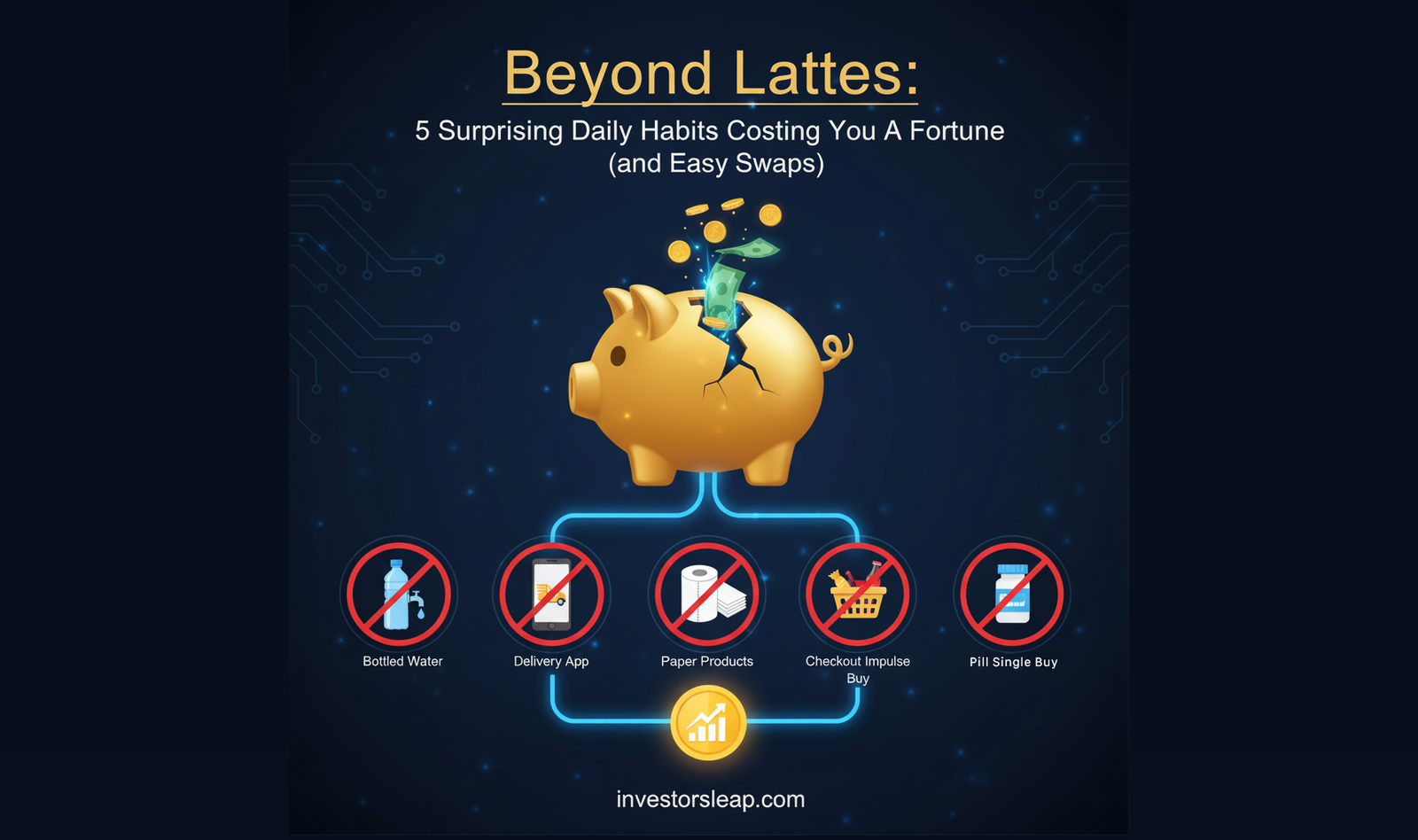
Ready to spot the financial blind spots in your daily routine? Here are 5 surprising daily habits costing you a fortune, and simple, affordable swaps to reclaim your cash.
1. The Bottled Water Tax
It’s the ultimate convenience: grabbing a cold bottle of water wherever you are. But buying premium bottled water every day is essentially paying a massive tax on a product that is nearly free from your tap.
- The Leak: If you buy two $2 bottled waters per day, five days a week: $20 week, or $1,040 per year.
- The Swap: Invest in one high-quality, insulated water bottle.
- Easy Fix: Fill it up before you leave the house every morning.
- Pro Tip: If you dislike the taste of tap water, buy a Brita pitcher for your fridge. It costs about $35 upfront, and the filters are pennies per gallon compared to bottled water.
2. The Delivery Fee Stack
Ordering dinner via an app is fast and easy. But when you factor in the service fee, the delivery fee, and the tip, the cost of your $20 meal can easily balloon to $30 or $35. Habitually using delivery apps for small, everyday errands is the ultimate “convenience tax.”
- The Leak: Using delivery 3 times a week with an average of $10 in fees/tip per order: $30 week, or $1,560 per year.
- The Swap: Implement the “15-Minute Rule.”
- Easy Fix: If the restaurant is within a 15-minute round-trip drive, pick it up yourself. You instantly save all the fees.
- Meal Prep Fix: Commit to cooking 80% of your meals at home. Use the delivery apps only for true last-minute emergencies or special occasions.
3. The “Premium” Paper Product Trap
This includes buying highly pre-portioned, heavily marketed, or single-use paper and cleaning products that offer minimal extra benefit for a much higher price. Think single-use cleaning wipes, pre-cut veggie trays, or premium napkins.
- The Leak: Consistently paying a 40–100% markup for convenience items can easily add $500–$700 per year to your grocery bill.
- The Swap: Buy in bulk and buy the basics.
- Cleaning Fix: Switch from single-use disinfecting wipes to reusable microfiber cloths and a bulk bottle of cleaner.
- Grocery Fix: Buy larger portions of whole produce and dedicate 10 minutes when you get home to wash and chop them yourself. You save money and reduce waste.
4. The Impulse Purchase Aisle (AKA The Checkout Line)
Those gum packs, energy drinks, magazines, and novelty gadgets strategically placed near the register are designed for one purpose: to capitalize on your momentary boredom or hunger.
- The Leak: If you grab a $4 snack/drink at the checkout line 4 times a week: $16 week, or $832 per year.
- The Swap: Employ the “Three-Item Rule.”
- Easy Fix: Never place more than three items from the impulse aisle into your basket. Better yet, leave those aisles entirely.
- Preparation: Always keep a healthy, non-perishable snack (like a granola bar or trail mix) in your bag or car. This eliminates the hunger impulse that drives most checkout purchases.
5. The Over the Counter Cure Tax
Do you always run to the pharmacy for pre-packaged, single-serving cold medicine, pain relievers, or vitamins the moment a headache hits? Buying small quantities at high markups is costly.
- The Leak: Constantly buying small, convenient packages of brand-name products instead of generic, bulk bottles can easily cost an extra $300–$400 per year.
- The Swap: Create a “Wellness Bulk Drawer.”
- Bulk Buy: Purchase generic versions** of common medicines (Ibuprofen, Acetaminophen, Allergy Relief) in their largest available bottle. (**Consult with your physician prior to switching to generic versions. Do your research…)
- Stock Up: Keep a well-stocked drawer at home so you are never forced to buy the expensive, convenient package at the corner store when you feel sick.
🚀 Investor’s Leap: Fund Your Future, Not Your Fees
Every single dollar you “find” by cutting these five habits is a dollar you can put toward your financial goals.
Instead of just saving this money, create an automatic transfer. Calculate the minimum you save (e.g., $50 a week from eliminating delivery fees and bottled water) and set up a weekly automatic transfer of that amount into a diversified ETF or mutual fund. You are not just saving; you are now using the discipline you gained to accelerate your wealth building.
Which of these daily habits is leaking the most from your wallet? Start with the easiest swap today!