
Introduction: Your Financial Safety Net
Imagine your car suddenly needs a $1,000 repair, you get hit with an unexpected medical bill, or heaven forbid you lose your job. Without a safety net, these situations can quickly spiral into financial disaster, forcing you into high-interest debt or derailing your long-term goals.
This is where your Emergency Fund comes in.
An emergency fund is a stash of readily accessible cash specifically designated to cover unexpected expenses and protect you from life’s curveballs. It’s the absolute first pillar of a strong financial foundation, more important than investing, paying off low-interest debt, or even buying that new gadget.
What is an Emergency Fund (and What It Isn’t!)
Let’s get clear:
- What it IS: A dedicated savings account for unavoidable and unforeseen expenses. Think job loss, major medical emergencies, urgent home repairs, or unexpected car breakdowns.
- What it ISN’T: A vacation fund, a down payment for a new car you want, holiday shopping money, or a fund for a planned renovation. These are important goals, but they should be saved for separately.
The key characteristic of an emergency fund is that it’s there to prevent a crisis from becoming a catastrophe.
How Much Should You Save? The Golden Rule
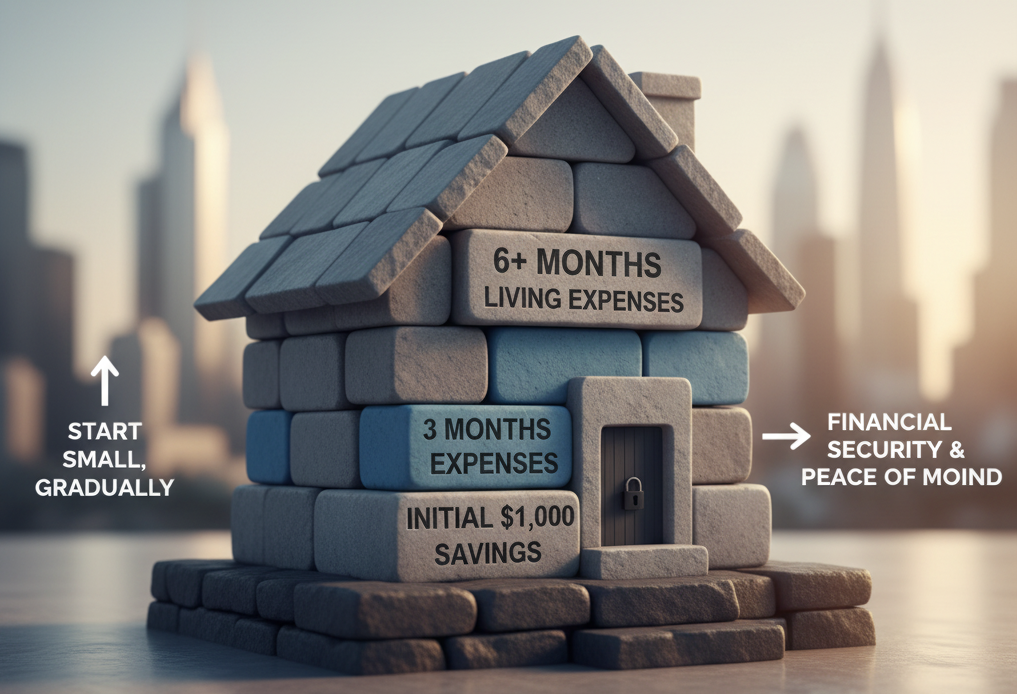
The standard recommendation for an emergency fund is to save 3 to 6 months’ worth of essential living expenses.
Why this range?
- 3 Months: A good starting point, especially if you have a stable job and a second income in your household.
- 6 Months: Ideal for most people, offering more breathing room if you face a prolonged job search or a series of unexpected events.
- More (9-12 Months): Consider this if you have an unstable income, are self-employed, have significant dependents, or work in an industry with high job insecurity.
How to Calculate Your Emergency Fund Goal:
- List ALL your essential monthly expenses: Rent/mortgage, utilities, groceries, transportation, insurance premiums, minimum debt payments, and other non-negotiable costs.
- Exclude non-essentials: No dining out, entertainment, subscriptions you can cancel, or shopping sprees. This is about survival.
- Total your essential monthly expenses.
- Multiply that total by 3, 6, or even 9-12 (depending on your comfort level and situation).
Example:
- Essential Monthly Expenses: $2,500
- Emergency Fund Goal (6 months): $2,500 x 6 = $15,000
Where to Keep Your Emergency Fund (Accessibility is Key)
Your emergency fund needs to be safe and easily accessible. This means it should NOT be invested in the stock market, where its value can fluctuate.
The best place for your emergency fund is a High-Yield Savings Account (HYSA).
- High-Yield: Earns significantly more interest than a traditional savings account, helping your money grow (albeit slowly) and keep pace with inflation.
- Liquid: You can access your money quickly if an emergency strikes, usually within 1-3 business days.
- FDIC-Insured: Your money is protected by the U.S. government up to $250,000 per depositor, per institution, in case the bank fails.
💡 Investor’s Leap Tip: Consider opening your HYSA at a different bank than your primary checking account. This slight barrier makes it harder to dip into your emergency fund for non-emergencies and reinforces its separate purpose.
Tips for Building Your Emergency Fund Quickly
Getting to your goal can feel daunting, but every dollar counts. Here are some strategies to accelerate your savings:
- Automate It: As discussed in our “Pay Yourself First” post, set up an automatic transfer from your checking account to your HYSA every payday.
- Trim the Fat: Temporarily cut back on non-essential spending. Cancel unused subscriptions, pack lunches, or reduce dining out.
- Sell Unused Items: Declutter your home and sell clothes, electronics, or furniture you no longer need.
- Side Hustle: Pick up extra work for a few months – freelancing, gig work, or odd jobs – and direct all those earnings straight to your fund.
- Windfalls: Direct any unexpected money (tax refunds, bonuses, gifts) straight into your emergency fund.
Conclusion: Sleep Soundly, Plan Boldly
An emergency fund isn’t an exciting investment, but it’s the most crucial one you’ll ever make. It buys you peace of mind, protects your credit score, and prevents financial setbacks from derailing your long-term wealth-building journey.
Start today. Calculate your goal, choose your HYSA, and begin building that impenetrable financial shield. Once your emergency fund is fully stocked, you’ll be amazed at the confidence it gives you to pursue bigger financial goals.